Year: 2025

  • Most people aren’t acting

    I don’t know exactly when it hit me that most of my mental imagery of people and relationships came from fictional characters rather than first-hand experience, but it was way too late.

    Just think about a romantic scene. A couple about to have their first kiss. Unless you’re some kind of creep, you probably havent seen this close-up from a third person perspective, ever. Sure, you might have been one of those people, but that’s quite different.

    Your third-person image memories are all captured with cameras, on sets, with lights and make-up artists and some bored staff trying to stay out of shot. If it felt genuine, that’s just a tribute to the skill of the actors.

    Or maybe you’re more of a reader. You know you can’t read people’s minds, but that internal monologue reads so naturally. It’s easy to forget that these people don’t actually exist. Authors aim for plausibility and narrative consistency more than actual realism. It’s not science. These aren’t observations from the real world. They’re made up.

    But let’s get back to those actors. Acting is hard, partly because actors have to make emotions and thoughts legible through their faces. We have to see the exact moment they get an idea, or fall in love, or feel disappointment. But real people simply don’t do that. If you watched me cfor an hour while I read funny or somber articles online, you wouldn’t be ale to tell the difference from my face. Most of us only “transmit” when they think they’re being observed, and even then we do it poorly.

    I believe that our constant exposure to acting has given us a pervasive belief in mind reading. When you think you know what someone else is feeling, you’re attempting mind reading. When someone expects you to know they’re upset (or why) they’re expecting mind reading.

    Movies teach us that emotions are obvious. Real life teaches us the opposite. People are hard to read, even when they’re trying to express themselves.

    This all means that in real relationships, whether that is with a romantic partner, a friend or a colleauge, it is important to talk explicitly about your emotions. I’m not saying you need to get on a therapy couch, just that you can make it clear that you are both interested in their internal life and unable to understand it without their help.

    I know this approach has been invaluable both in my personal relationships and at work.

    Side note: this concept is somewhat adjacent to the “Fundamental Attribution Error” where people attribute other’s actions to their internal make-up rather than some kind of situational duress. Also a fun thing to look up.

  • Being wrong feels just like being right

    This is one of the most powerful mantras in my life. Like many people I started out believing that I have an innate sense that would tell me if there is a chance that one of my beliefs are wrong.

    I’m not just talking about the big-picture beliefs like religion or morals here: My most vivid example is showing up a week early to my best friends wedding. You see I had been so sure of the date that I didn’t think to double-check the invite that was stuck to my fridge with a magnet, even as I dressed and drove 40 minutes to the wedding venue. It’s only when I realised none of the people in the church were familiar that the penny dropped.

    Once I understood that I could be completely sure while also being completely wrong, I started trying to understand how to introduce the correct uncertainty into my systems. I started keeping track of my bets, and I try to avoid expressing absolute certainty. But of course, when you’re sure you don’t try to do those things, and it would be crippling if you questioned every single moment of every day.

    So also have some sympathy for yourself and others when you inevitably make mistakes that you had no warning about.

    I learned a lot about this idea of certainty from Kathryn Schults’ work. This TED video sums it up pretty well, but I encourage you to read more about this.

  • Relative frequency of SI units and prefixes

    I am huge a fan of the SI system, but I’ve often noticed that even my academic colleagues take a mix-and-match aproach to the BIPM standards. It is common for chemists to use Ångstrom over nanometre, and I don’t think I’ve ever seen anyone use megagram over tonne.

    Perhaps people are so used to mg (miligram) that they instinctively feel that Mg (megagram) would be confusing, and I admit Gg looks a bit weird. Is that a trend? Do people avoid repeated letters in their unit names? Mm (megameter) does feel a bit odd, although mm (milimeter) feels much more familiar.

    These questions drove me to quantify the relative frequency of the SI units and prefixes.

    Google search results

    I used Google search results as a proxy for usage. I also tried the Google Ngram project, but that turned out to be harder than I wanted it to be. After downloading all the data and parsing some of it, it didn’t contain all the terms I wanted.

    Here is the complete table showing log10(Google search results + 1) for every combination of the SI prefixes with the units mentioned in the SI brochure as base units or derived units. I’ve skipped degrees Celsius as the Google search API kept erroring on searches like “quettaCelsius”.

    It’s always interesting when you get results like this – you can immediately start seeing some structure.

    These things jump out at me:

    • quecto, ronto, ronna, and quetta were added in 2022 and you can clearly see they haven’t been as widely adopted as the other prefixes
    • No-one uses prefixes with steradian
    • The “-er” spellings of metre and litre are more popular than the “-re” spellings that the BIPM uses, but not by much (I’m not sure if this is an artefact of Google combining results for the two)
    • For tonne, the negative power prefixes (milli) are much less popular than the positive ones (mega).

    Basic stats

    Here are the counts across all prefixes for the units. It’s obvious that the base unit counts are somewhat complicated by common words like “gray” or names like “Henry”. I’d imagine Pascal and Newton have the same problem.

    Then there are the prefixes, which I’ve kept in their power order.

    I was a bit surprised at how unpopular deca/deci are. I think there is just a strong preference for powers of three in the “engineering units”.

    Tonne

    Let’s dig in to more detail for the mass units (gram and tonne). I’ve plotted equal masses on the same vertical height to compare. I was surprised that only tonne meaningfully shadows megagram. On this view it’s also quite clear how infrequently people use tonne with negative power prefixes.

    Spelling

    The “-er” spelling is consistently higher than the “-re” spelling for meter/metre and liter/litre. The following chart shows the ratio of the spellings for different prefixes.

    Coding information

    The basics of the search code are pretty simple:

    def search(term):
        response = requests.get(URL, params=BASE_PARAMS | {"q": term, "exactTerms": term, "num": 0})
        time.sleep(0.5)
    
        try:
            return int(response.json()["queries"]["request"][0]["totalResults"])
        except Exception:
            print(response.json())

    Then a loop like

    for prefix, unit in product(prefixes, units):
        searchterm = f"{prefix}{unit}"
        
        if searchterm not in db:
            db[searchterm] = search(searchterm)

    Some details have been omitted from this code for brevity: db is a shelve database. I’m using requests for the API access and BASE_PARAMS contains the details for my Google Custom Search API engine, which means that I had to pay $2 of my own money to get the answers I was craving.

  • Novelty is easy, quality is hard

    I am often surprised when people claim that “AI can’t make anything truly new”. I think making new things is very easy

    Let’s try generating some novel text:

    fHabBiCcABnqjSAIysqcyJAnCTWCIk

    That’s very novel. I used Python to produce random letters:

    import random
    import string
    
    print(''.join(random.choice(string.ascii_letters) for _ in range(20)))

    Oh, but those aren’t even words, you say? OK, let’s try again:

    anthocyan Delhi iliococcygian methodologically opah reapparel pretimely humoristic Jingbai specks

    This was made by randomly selecting words from my system dictionary.

    import random
    import pathlib
    
    words = pathlib.Path('/usr/share/dict/words').read_text().splitlines()
    print(' '.join(random.choice(words) for _ in range(10)))

    Very novel. I now hear someone say that this is not a well-formed English sentence.

    We now stand at a crossroads. We can enforce the structure of a sentence (something like “the <noun> <verb>ed the <noun>”) or we could work statistically off some corpus with simple Markov chains. These simple Markov processes can generate some surprisingly readable text (without using any rules about the english language). Here’s a snippet that was on top of the kingjamesprogramming tumblr site when I went there. This was generated by a Markov process trained on the King James bible and “The structure and interpretation of computer programs“.

    then shall they call upon me, but I will not cause any information to be accumulated on the stack.

    I’m pretty sure that’s a novel thought. But we’re starting to get to what people would perhaps agree is a sentence but start objecting to more on semantic grounds. Does this sentence mean anything? Is it true?

    If we go down the “The noun verbed the noun” route, we end up with a slightly different feeling. A feeling of “sameness”. I think often this is what people react to when they spend a bit of time conversing with ChatGPT. It’s not the novelty of the words or even ideas they’re responding to, it’s more the sameness of the vibe. Something that in people could be called their writing voice.

    This is a very deep concept, but can also be circumvented by leaning harder into randomness. In the GPT API, you can increase the parameter called “temperature” to get some more “out there” combinations.

    In the end we’re back to the same thing: It’s not the novelty that’s the problem. It’s the quality.

  • Don’t judge your open-loop predictions by closed-loop outcomes

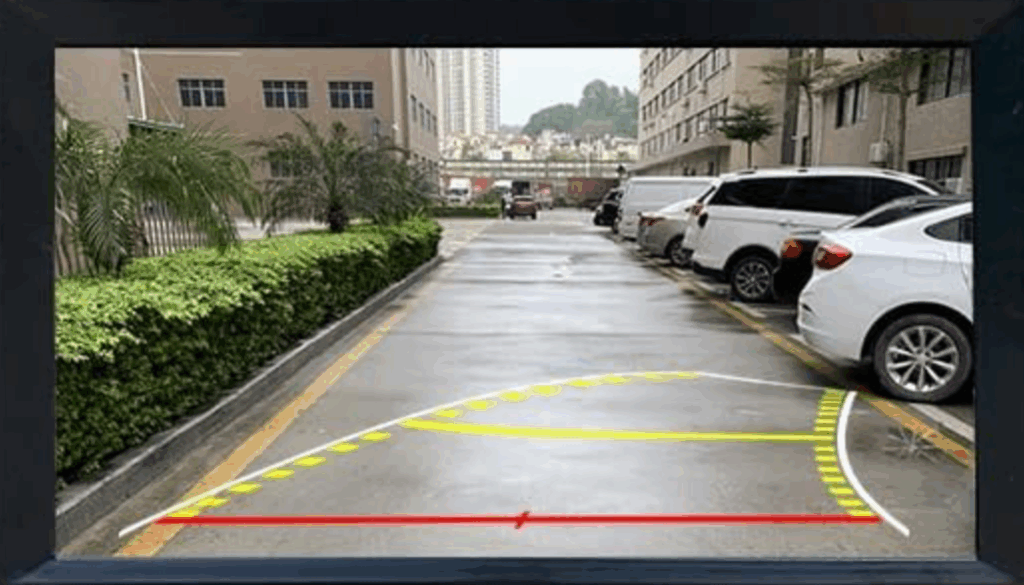
    Many of us have driven vehicles with backup cameras that allow us to see where we would go if we kept the steering wheel at a particular angle. When the screen shows the lines colliding with an obstacle, we know we should behave differently: take this prediction into account and turn the wheel a different way.

    Backup camera view showing vehicle trajectory.

    These lines are an example of “open-loop” predictions. In other words, they show what will happen if you didn’t use the output of the model (no feedback). In contrast, what actually happens is a “closed-loop” outcome – you are using all your information to avoid the collision.

    I often hear people say that predictions were “wrong” because the bad outcome predicted didn’t happen. This is only valid if no corrective action was taken due to the prediction.

    We should rather evaluate predictions based on experiments where we fix the inputs completely. If a predictive model is doing its job right, and you take corrective action, the worst predictions will never occur, because you used the model to predict and sidestep them.